Innovation · Apr 2, 2026
The Explanation Checker: Why Getting the Right Answer Isn't Enough Anymore
Technical assessments have a credibility problem: correct answers can come from AI, helpers, or repos while automated scoring still awards full points. Post-test explanation verification checks whether candidates truly understand their submissions.
Author
Achin Agarwal
Published
Apr 2, 2026
Reading time
2 min read
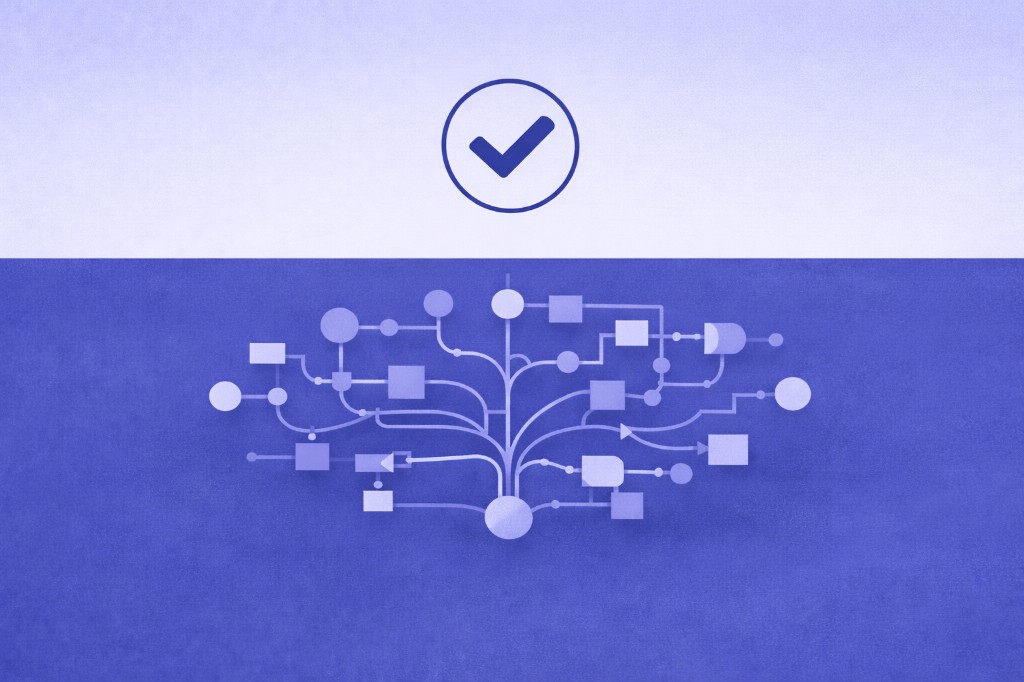
Technical assessments have a credibility problem. Candidates produce correct answers through methods that have nothing to do with actual competence: AI chatbots, real-time messaging with helpers, solution repositories, screen sharing. The automated scoring system awards full points, and hiring teams advance candidates who can't perform the work.
"The problem is not detection of cheating during the test. The problem is verification of understanding after the test."
Post-Test Verification: A Different Approach
Rather than trying to prevent external help during problem-solving, the Explanation Checker verifies whether the candidate understands the solution they submitted. After completion, the platform selects 2–3 correctly answered questions and asks the candidate to record a video walkthrough of their reasoning.
Candidates can't prepare. They don't know which questions will be selected. They can't consult resources during recording as it's a single continuous take. And they can't bluff, because the AI evaluation checks for logical flow, decision rationale, technical precision, and edge-case awareness.
Why It Actually Works
The system exploits a fundamental asymmetry: obtaining a correct answer takes seconds of access to external resources. Understanding why that answer is correct requires internalised knowledge that can't be quickly transferred. A language model can generate working code instantly, but it can't implant the understanding required to explain it coherently.
Candidates who cheated exhibit consistent patterns: they describe what code does without explaining why they wrote it that way. They stumble on alternatives. They rely on vague generalities instead of specific technical reasoning. The system flags these for human review. It doesn't attempt to definitively prove cheating.
The Deterrent Effect
Perhaps the most interesting outcome: the existence of explanation verification changes candidate behaviour before submission. Candidates who know they'll need to explain their solutions become more cautious about external assistance. They can't memorise explanations in advance, can't prepare generic templates, and can't get real-time help during recording. The mechanism functions as both filter and deterrent.
The result: assessment scores that reliably predict technical capability, restoring the assessment's function as a genuine filter rather than an easily gamed checkpoint.
Want to see this in your own hiring workflow?
14-day free trial · No credit card required
Latest insights
View all insights →
The Interview Is the Last Place You Should Be Evaluating Someone
By Nandini Vashistha
Interviews were never meant to verify resumes and skills. When earlier stages do that work, hiring managers finally get to evaluate the person - not prove they belong in the room.
Read insight
Imagine If the Olympics Worked Like Hiring
By Nandini Vashistha
Resumes are training history, not the race. Fair hiring means the same rules, the same track, and evidence of who can actually do the job.
Read insight
The Hidden Cost of Traditional Hiring That Most HR Teams Never Measure
By Nandini Vashistha
The biggest hiring cost is not job boards or agency fees. It is waiting - and the great candidates who accept another offer before yours ever goes out.
Read insight© 2026 Xquizit. All rights reserved | ALGO ONE AI PRIVATE LIMITED